How AI Helps Detect Gambling Addiction Patterns
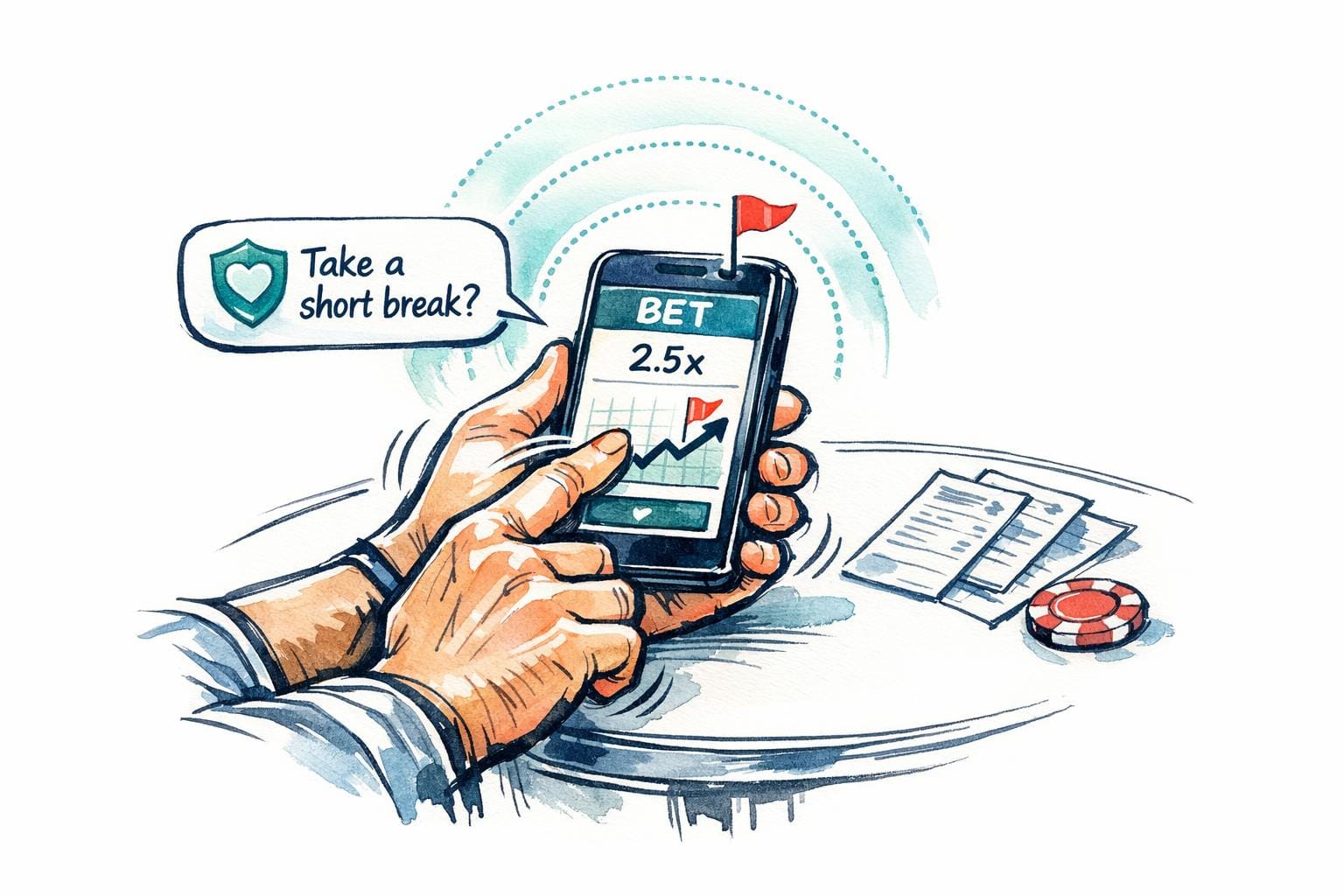
AI is transforming how gambling addiction is identified and addressed. By analyzing player behavior in real time, it detects risky patterns like frequent deposits, chasing losses, late-night gambling, and erratic bet sizes. These systems use machine learning to predict high-risk gamblers early - often within the first week of activity - allowing for timely interventions.
Key highlights:
- Problem gambling affects 8.1%-8.9% of sports bettors; 2.5 million U.S. adults have severe gambling disorders.
- AI tracks behaviors like multiple deposits in one session, balance depletion, and late-night activity to flag risks.
- Predictive models like Random Forest achieve up to 89% accuracy in identifying problem gamblers.
- Tools like WagerProof send personalized alerts, recommend safer betting habits, and offer self-exclusion options.
AI systems are now a regulatory requirement in many regions, ensuring operators intervene before gambling issues escalate. However, ethical oversight and privacy protections are critical to prevent misuse.
Will Artificial Intelligence be the Magic Bullet to Gambling Addiction? | SiGMA TV

Common Behavioral Signs of Gambling Addiction
High-Risk vs Low-Risk Gambling Behavior Patterns: Key Statistical Differences
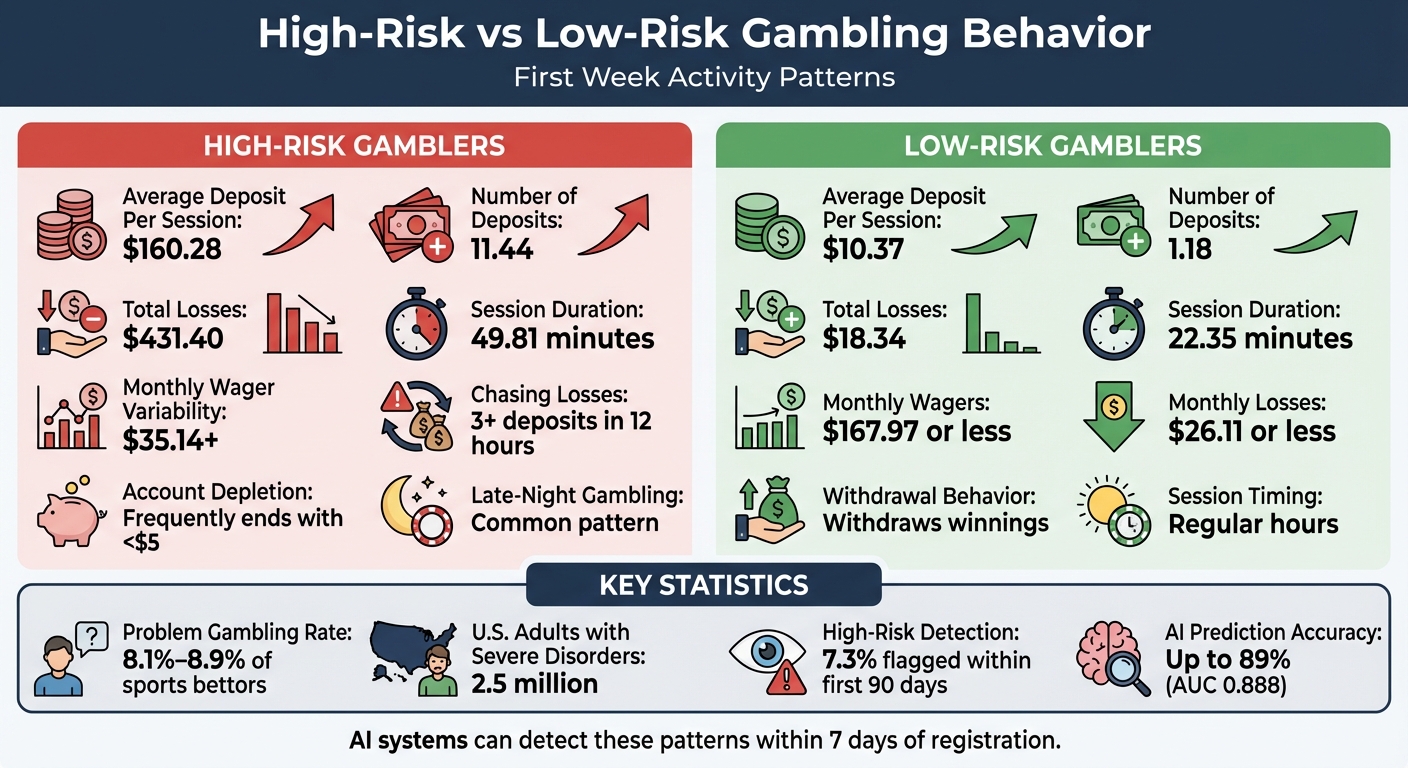
Identifying risky gambling behavior early is essential to prevent both financial and emotional distress. Research shows that high-risk gambling tendencies can often be detected within just seven days of registering on a betting platform. Problem gamblers tend to underestimate their losses and overestimate their winnings, making objective behavioral tracking a crucial tool. Early warning signs often include patterns like frequent deposits, depleted balances, and erratic betting behavior.
Frequent Deposits and Chasing Losses
One of the clearest indicators of gambling addiction is the frequency of deposits. When players make multiple deposits in a single session, it often signals a deeper issue. For instance, "chasing losses" is defined as making three or more deposits within a 12-hour period. During their first week, high-risk gamblers exhibit alarming patterns: they deposit an average of $160.28 per session, make 11.44 deposits, and lose $431.40. In stark contrast, low-risk players deposit just $10.37 per session, make 1.18 deposits, and lose $18.34.
This behavior often stems from the gambler’s fallacy - the mistaken belief that a win is just around the corner after a series of losses. This mindset can lead to escalating deposits and mounting financial problems. AI-driven systems are adept at identifying these deviations in deposit frequency, flagging potential at-risk players for further review.
Depleting Balances and Late-Night Gambling
Another major red flag is account depletion. Problem gamblers frequently drain their entire account balance, often finishing sessions with less than $5 remaining, rather than withdrawing any winnings. Late-night gambling is another critical indicator, recognized as one of the nine "markers of harm" by groups like the Senet Group. High-risk gamblers engage in much longer sessions, averaging 49.81 minutes - more than double the 22.35-minute sessions of low-risk players.
Late-night activity is particularly concerning because it often coincides with reduced self-control and heightened emotional states, which impair rational decision-making. These patterns - whether it's balance depletion or extended late-night sessions - serve as key data points for AI models designed to detect harmful gambling behavior.
Irregular Bet Sizes and Impulsive Decisions
Erratic betting patterns are another hallmark of gambling addiction. Sudden fluctuations in wager amounts often reflect impulsive decision-making driven by emotions rather than strategy. For example, a daily wager variability of at least $35.14 over a month is a significant threshold for identifying problem gambling. This behavior is linked to the illusion of control - a cognitive bias where gamblers wrongly believe they can influence random outcomes.
High-risk gamblers often exhibit abrupt shifts, such as small bets suddenly turning into large wagers. On the other hand, low-risk gamblers typically wager $167.97 or less per month and experience losses of $26.11 or less. By monitoring these shifts in betting behavior, AI detection systems can help identify and intervene before the problem worsens.
How AI Identifies Gambling Addiction Patterns
AI systems can analyze raw transactional data to detect early signs of gambling addiction, often within just a week of a player's activity.
Machine Learning Models for Behavior Prediction
AI platforms use a two-step process to predict risky gambling behavior. First, unsupervised methods like k-means clustering group players based on their betting habits. Then, supervised models - such as Random Forest and Gradient Boosting Machines (GBM) - predict which players are at high risk. One study demonstrated these models' effectiveness, achieving an AUC (Area Under the Curve) of 0.888, meaning the AI correctly identified problem gamblers nearly 89% of the time.
Between January and April 2022, researchers examined data from 37,986 gamblers registered with a European online casino. They discovered that just the first seven days of activity provided enough information to predict long-term risk patterns. Separately, a study at PlayNow.com in British Columbia analyzed 2,157 self-excluded gamblers against 17,526 control users. Their Random Forest model achieved an AUROC (Area Under the Receiver Operating Characteristic curve) of 0.75. Stephanie Finkenwirth, a researcher at the University of British Columbia, noted:
"The input variable with the greatest predictive signal (based on feature importance values) was Variance in Money Bet per Session." - Stephanie Finkenwirth
These models rely on markers like bet frequency, total deposits and losses, and variability in betting amounts.
Real-Time Data Tracking and Analysis
AI systems take predictive modeling further by incorporating real-time tracking, which captures fluctuations in player behavior as they happen. This includes monitoring in-session behaviors and broader temporal patterns like frequent deposits in a single session, rapid account depletion, spikes in late-night gambling, and abrupt changes in activity.
For example, studies have shown that the number of monetary deposits correlates strongly (0.40) with a player being classified as high-risk. Another key metric is betting variance - the range and unpredictability in bet sizes. High-risk players often display extreme fluctuations, placing small bets followed by large wagers up to 10 times their average. This volatility acts as a red flag for AI systems, which aim to intervene before gambling behaviors spiral out of control.
Clustering Algorithms for Risk Classification
Clustering algorithms add another layer to AI's ability to assess gambling risks. Among these, k-means clustering is frequently used to divide players into categories like "casual" and "intensive" gamblers. This method evaluates factors such as session frequency, density, and risk-taking tendencies.
In a 2024 study focusing on cryptocurrency gambling, researchers identified an "intensive" group that placed 62 to 303 bets within a specific period, compared to just 6 to 7 bets for "casual" players. Intensive gamblers were also found to participate in more than two sessions per day and gamble almost daily, while casual players showed longer gaps between sessions. To manage outliers - such as extremely large bets or unusually high activity - researchers applied "trimmed k-means clustering" to maintain stable group definitions.
Once clusters are defined, AI systems can classify new players into risk categories based on their early betting patterns. In one European study, about 7.3% of registered gamblers were flagged as high-risk within their first 90 days. This automated classification allows gambling platforms to initiate early interventions, potentially reducing harm before behaviors become entrenched.
WagerProof's AI Tools for Responsible Betting

WagerProof leverages AI to analyze betting patterns in real time, flagging behaviors that may indicate risky gambling habits. These tools go beyond just identifying risks - they also provide insights to guide users toward safer betting practices and disciplined risk management.
Automated Detection of Betting Outliers
WagerProof builds on traditional AI methods by automating the identification of unusual betting patterns. Its system monitors key factors like deposit frequency, wager amounts, and session durations to detect behaviors linked to higher gambling risks. For instance, if a user makes multiple deposits within a 12-hour period or significantly increases their bet sizes, the platform flags these patterns for further review. Research highlights that deposit frequency and betting variance are strong indicators of problematic gambling, with frequent deposits correlating closely with risky behaviors.
WagerBot Chat for Data-Driven Guidance
WagerBot Chat, WagerProof's AI-powered assistant, connects to live data sources for detailed, real-time analysis. By incorporating live odds, injury updates, weather conditions, and statistical models, it delivers context-based recommendations to users. As noted by Technology Org:
"AI... can monitor every player. If a program flags an account for bad betting patterns, such as frequent deposits or long play sessions, it could trigger actions to support the player."
This level of transparency ensures users understand the reasoning behind each recommendation, helping them avoid impulsive decisions or the temptation to chase losses.
Education and Data Transparency
In addition to its automated tools, WagerProof prioritizes educating users about responsible betting. By clearly explaining betting data and statistical models, the platform helps users identify when their behavior strays from safe norms. Research indicates that behavioral signs - like frequent account depletion or in-session deposits - can be more predictive of gambling problems than total losses. By exposing these metrics and their implications, WagerProof equips users to self-regulate and make adjustments before their habits escalate into more serious issues.
AI-Based Interventions and Prevention Methods
AI's ability to detect risky behaviors is just the starting point. The real impact comes from its role in triggering timely interventions that help prevent harmful actions from escalating.
Risk Scores and Automated Warnings
AI assigns risk scores by analyzing patterns like deposit frequency, session length, and account depletion trends. These scores are divided into tiers - No-risk, Level 1, Level 2, and Level 3 - with each level activating increasingly firm interventions. For example, Level 1 might issue a simple reminder about responsible gambling, while Level 3 could enforce betting limits or initiate self-exclusion measures.
In March 2024, Portuguese Gambling Inspection adopted an AI system developed by NOVA IMS. This system monitored daily deposits, login habits, and session durations, flagging around 1,500 users showing signs of harmful behavior. The authorities now receive automatic alerts for such cases, enabling them to implement targeted prevention strategies.
Interestingly, less than 1% of players typically score high enough to warrant immediate intervention on any given day. When interventions are triggered, AI-driven reinforcement learning has boosted self-exclusion compliance rates by 35%. Additionally, high-risk scores automatically exclude vulnerable players from marketing campaigns, ensuring they don’t receive promotional offers or bonuses that could worsen their situation.
Personalized Recommendations and Support Resources
Generic warnings often fall flat. Instead, AI delivers customized messages that address specific behaviors, like chasing losses, gambling late at night, or making repeated deposits in quick succession. This tailored feedback helps players recognize risky habits and encourages them to make better choices.
AI also steps in to encourage good decisions. For example, when users win big, the system can send a "withdrawal nudge", urging them to secure their winnings instead of continuing to gamble. One study found that 38% of gamblers acted on this advice, withdrawing their funds the same day they received the AI-generated message.
Beyond nudges, AI can predict when someone might benefit from self-exclusion and proactively offer this option. Research shows that 7.3% of new gamblers become high-risk within their first 90 days, emphasizing the value of early intervention.
While these personalized methods are powerful, their use must align with ethical standards and regulatory requirements.
Ethical Standards and Regulatory Compliance
The same AI tools designed to protect players can, unfortunately, be exploited for harmful marketing practices. Timothy Fong, Co-director of the UCLA Gambling Studies Program, highlights this concern:
"It's really the use of AI that creates predatory scenarios, where people who are already vulnerable because of mental health issues or a gambling addiction could be manipulated or targeted without their knowledge".
To counter such risks, regulations now require transparency in AI algorithms and human oversight. Rather than acting alone, AI systems should flag concerns for review by human support teams, ensuring balanced decisions. Operators must also maintain detailed audit logs of alerts, false positives, and corrective actions for regulators to review.
In February 2025, researchers Bakang Monei Motshegwe and Wamasego Isabella Batshogile from the University of Botswana tested a multi-modal AI framework. Using data from 2 million gambling transactions and 100,000 textual interactions, the system achieved 94.7% accuracy in identifying risky behaviors. It also improved self-exclusion compliance by 35% and reduced self-reported distress by 31%. Motshegwe stated:
"To ensure responsible AI deployment, it is essential to establish clear ethical guidelines and human-in-the-loop oversight for all AI-based gambling addiction detection frameworks".
Data protection is another critical area. Strong encryption, transparent consent processes, and adherence to global standards like GDPR and CCPA are essential, especially for biometric data. Over 70% of licensed online casinos now use AI-driven behavioral analytics to enhance compliance and detect fraud. These systems focus on collecting only the data necessary for fraud detection or responsible gambling objectives, minimizing privacy risks.
Conclusion
AI is reshaping sports betting by shifting the focus from reacting to gambling-related harm to preventing it in the first place. Instead of depending on individuals to recognize risky behaviors themselves, AI keeps a constant watch - spotting warning signs like chasing losses, sudden increases in stakes, or late-night betting sprees before they spiral out of control. As Szymon Kubik from iGaming Express explains:
"AI acts as a digital safety net – not replacing human help, but making sure it comes early enough"
For example, Entain’s AI-driven ARC system sends over 2 million personalized messages each year to promote responsible gambling. Similarly, an AI system created for the Portuguese gambling authority flagged around 1,500 pathological gamblers using just one year’s worth of data.
But detection is only part of the equation. Transparency plays a key role in empowering users to make better choices. Tools like WagerProof illustrate this by blending real-time data, AI-driven outlier detection, and features like WagerBot Chat to provide bettors with clear, actionable insights. Instead of relying on hidden algorithms, bettors gain access to the information they need to assess risks responsibly.
The real challenge lies in ensuring AI is used to protect rather than exploit. Without ethical safeguards, these systems could be misused to target vulnerable players. To prevent this, ethical oversight - complete with human review and audit trails - is essential.
FAQs
What data does AI use to detect gambling addiction early?
AI uses player tracking data to spot potential early signs of gambling addiction. This involves studying behavioral patterns, account activity, facial micro-expressions, and even sentiment analysis from player interactions. By keeping an eye on these signals, AI can identify problematic behaviors and flag them before they grow into more serious issues.
How accurate are AI models at flagging problem gambling?
AI models excel at spotting problem gambling by examining behavioral trends such as rising losses and frequent deposits. Certain models have demonstrated an impressive ability to predict self-reported gambling problems, often outperforming others depending on their design and the data they utilize.
How is my privacy protected when AI tracks my betting behavior?
AI systems work to safeguard your privacy using methods like data anonymization, secure storage, and adhering to privacy laws such as GDPR or U.S. regulations. These tools often examine behavioral trends without revealing personal information - unless a specific situation calls for it. While these protections exist, it’s still crucial to understand how your data is collected and the rules that oversee online gambling platforms. Staying informed helps ensure your privacy remains intact.
Related Blog Posts
Ready to bet smarter?
WagerProof uses real data and advanced analytics to help you make informed betting decisions. Get access to professional-grade predictions for NFL, College Football, and more.
Get Started Free