How AI Predicts Momentum Shifts in Live Games
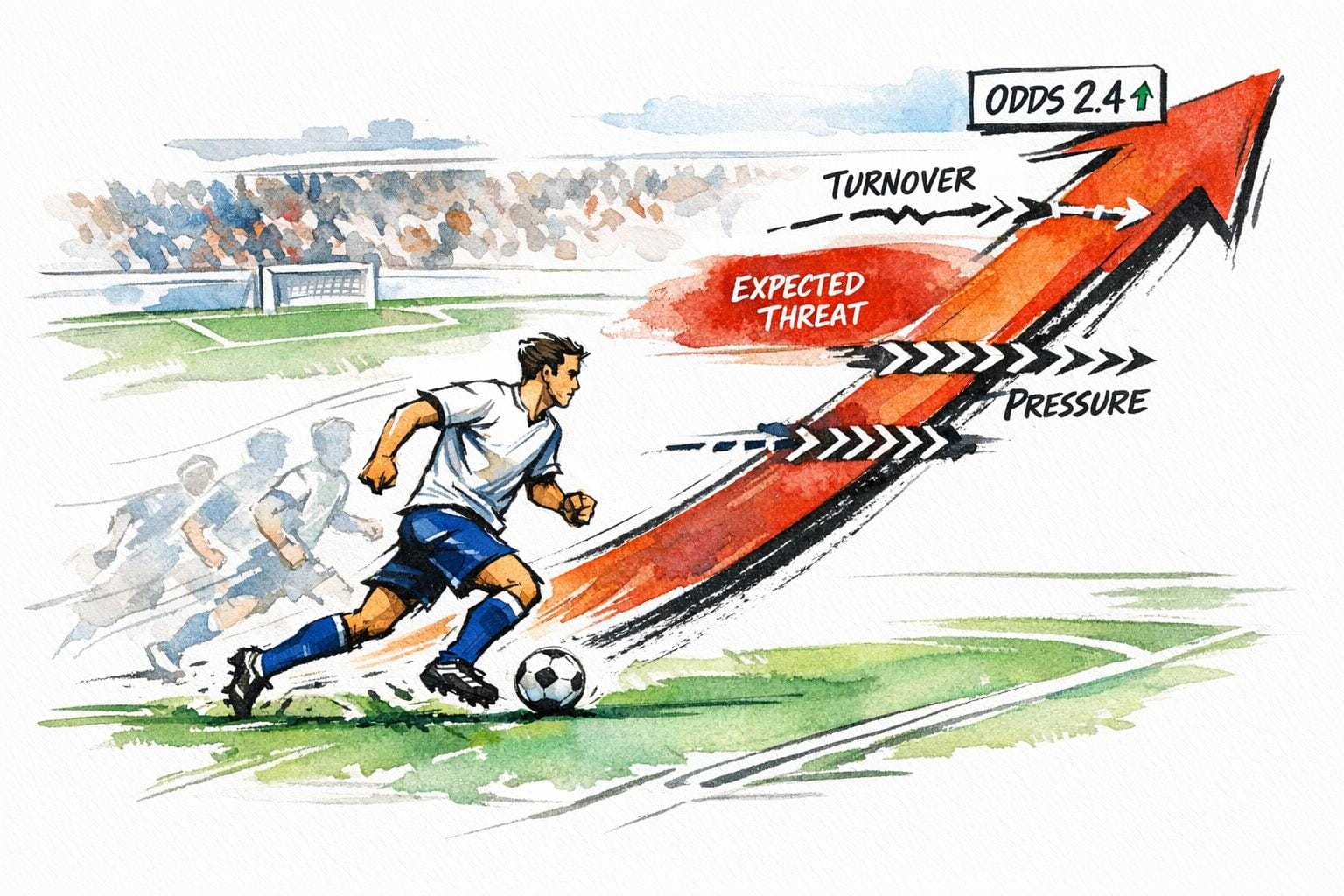
AI is changing how we track momentum shifts in live sports. By processing thousands of real-time data points - like possession speed, pressing intensity, and Expected Threat (xT) - AI identifies game-changing moments faster than humans or sportsbooks can react. This speed advantage helps bettors place smarter wagers before odds adjust.
Key takeaways:
- Momentum tracking: AI detects patterns like clusters of shots, turnover locations, or fatigue indicators.
- Advanced metrics: Tools like xT and Passes Per Defensive Action (PPDA) reveal deeper insights beyond standard stats.
- Real-time updates: AI integrates live data, including weather, injuries, and game flow dynamics, to refine predictions.
- Betting edge: Platforms like WagerProof alert bettors to value opportunities in seconds, leveraging AI’s precision.
While AI excels at identifying patterns, human judgment is still crucial for interpreting emotional or contextual factors like rivalry tension. Combining AI’s speed with your analysis can help you make smarter betting decisions.
Can AI Beat the Sportsbooks?
How AI Detects Momentum Shifts in Live Games
How AI Detects Momentum Shifts in Live Sports: 3-Stage Analysis Process
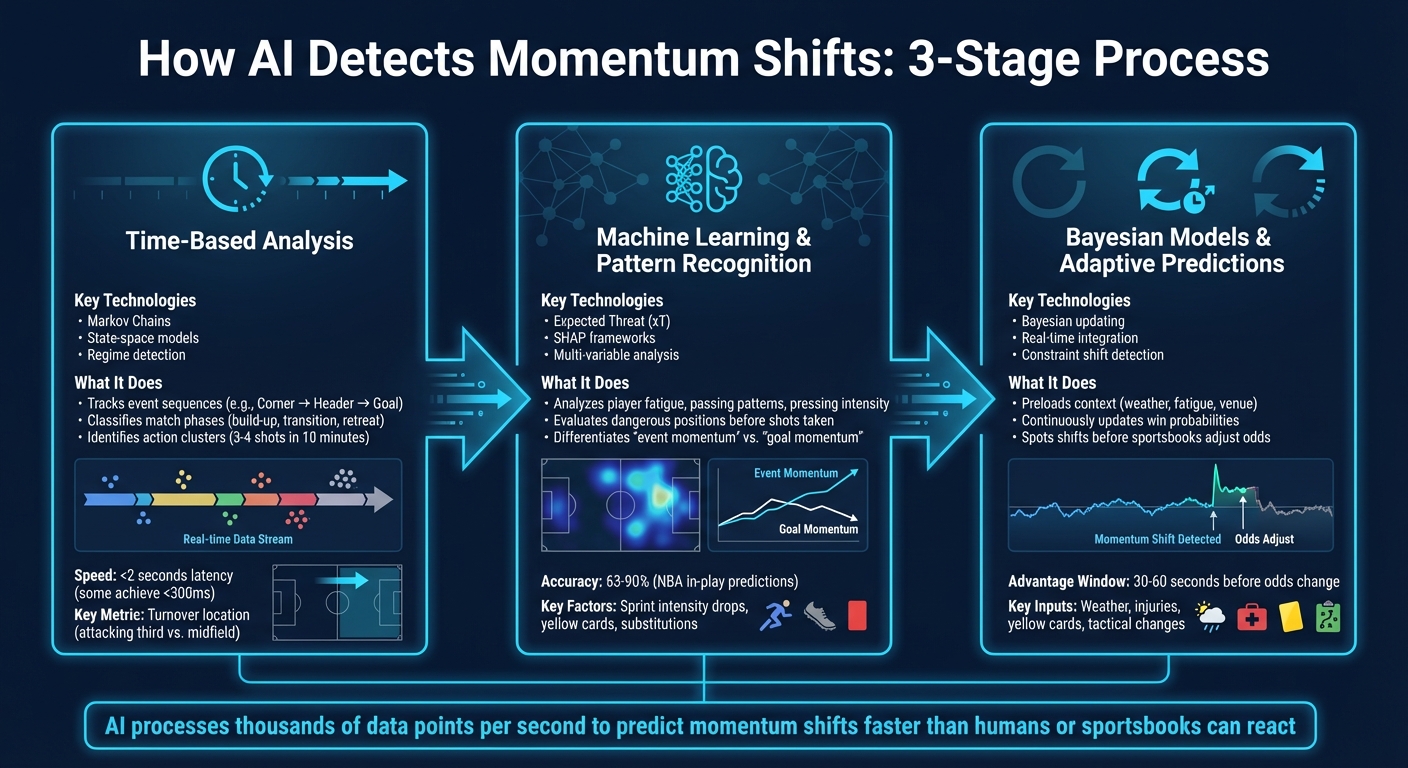
AI processes thousands of data points every second to pinpoint when a game's momentum changes. It relies on three main techniques: analyzing time-sensitive events, identifying patterns through machine learning, and adapting predictions in real time with Bayesian models.
Time-Based Analysis of Game Events
AI uses tools like Markov Chains and state-space models to represent matches as a series of states, calculating the likelihood of moving from one state to another - such as transitioning from "Corner → Header → Goal". This allows the system to predict momentum shifts even before they're visually apparent.
Advanced systems also use regime detection to classify matches into phases like build-up, transition, or retreat. When a game moves between these phases, AI flags it as a momentum change. Speed is critical here - real-time sports analytics systems typically operate with a latency of under two seconds, with some achieving sub-300 millisecond speeds for instant overlays like win probability sparklines.
"Momentum is real only when the numbers prove it... The edge is being faster with your interpretation of repeatable match stats." - PerformanceOdds.com
Momentum isn't defined by a single event but by a cluster of actions. For example, a series of 3–4 shots on target within a 10-minute span signals a sustained momentum shift rather than a random occurrence. The location of turnovers also matters - regaining possession in the attacking third is a stronger indicator of momentum than a recovery in midfield.
In addition to time-based metrics, AI leverages machine learning to enhance its ability to detect momentum.
Machine Learning and Pattern Recognition
Machine learning models excel at identifying relationships across multiple variables, such as player fatigue, passing patterns, and pressing intensity. Metrics like Expected Threat (xT) go beyond Expected Goals (xG) by evaluating how dangerous specific on-ball positions are, allowing AI to detect momentum shifts even before a shot is taken.
Frameworks like SHAP help explain which factors influence these predictions. For instance, they can highlight whether a drop in sprint intensity, a yellow card, or a substitution has triggered a momentum shift.
In the NBA, in-play prediction models demonstrate accuracy rates between 63% and 90%, depending on the game state. These models differentiate between "event momentum" (like corners or shots) and "goal momentum" (actual scoring potential), helping bettors avoid misleading signals.
When combined with time-based analysis, these machine learning techniques offer a detailed, multi-dimensional view of momentum shifts, which is critical for real-time decision-making in sports betting.
Bayesian Models and Adaptive Predictions
Bayesian models add another layer of sophistication by continuously updating predictions based on live game data. Before a match begins, AI preloads contextual factors such as weather, travel fatigue, and venue-specific quirks. As the game progresses, it integrates live events to refine win probabilities.
This approach provides a key advantage: spotting momentum shifts before sportsbooks adjust their betting lines. Tools like WagerBot Chat use this method, combining data on weather, odds, injury reports, and predictions into actionable betting recommendations. The system also accounts for "constraint shifts", such as a key player receiving a yellow card, which can immediately alter a team's defensive strategy and trigger momentum changes.
"A live model must handle delayed or incomplete data." - Lesly Shone, ATSwins
AI has shifted momentum tracking from subjective interpretations to data-backed evidence. By defining momentum as measurable changes in field position, chance quality, and error pressure, AI translates these shifts into actionable insights for bettors.
Key Metrics AI Tracks to Predict Momentum Shifts
AI thrives on analyzing data quickly, focusing on specific metrics that highlight major shifts during games. These metrics fall into three main areas: player and team performance, game flow dynamics, and external influences that can change the course of play.
Team and Player Performance Metrics
AI keeps a close eye on player usage rates and target shares to detect when offensive strategies shift toward or away from key players. It also evaluates stats like assist-to-turnover ratios, shooting variance, expected goals (xG), expected threat (xT), and passes per defensive action (PPDA) to uncover changes in player performance and team tactics.
To ensure accuracy, AI uses rolling averages from recent games, prioritizing current form over older data. Defensive discipline is another critical factor. For example, metrics like Fouls Committed Per 36 Minutes (PF/36) and referee tendencies help predict foul trouble, which can sideline important players. Additionally, fatigue from back-to-back games reduces a team’s win probability by roughly 6–8%, making scheduling an essential consideration for AI predictions.
From here, AI shifts its focus to in-game events to identify momentum changes in real time.
Game Flow Indicators
Not all momentum is created equal. AI separates genuine momentum from random events by identifying clusters of repeatable actions. For example, 3–4 shots on target within a 10–15 minute window often indicate a sustained shift. Metrics like field tilt (time spent in the attacking third) and box entries help determine whether possession leads to scoring opportunities or just safe, lateral passing.
Turnover location is another key metric. Regaining possession in the attacking third often signals immediate scoring opportunities, while recoveries in midfield are less impactful. Emergency defending stats, such as clearances and blocked crosses, can reveal when a team is under pressure, even before shots start piling up.
Set-piece patterns also matter - consecutive corners or free kicks increase scoring chances and can lead to defensive bookings due to sustained pressure. WagerProof’s AI agents continuously track these indicators, along with live odds and injury updates, to anticipate momentum shifts that could influence betting lines.
Contextual and External Factors
AI doesn’t stop at on-field data. It also evaluates external signals like crowd noise and the tone of commentators to assess the game’s atmosphere. Substitutions are treated as tactical shifts, often signaling changes in pressing intensity or a defensive strategy, such as dropping deeper to protect a lead.
Yellow cards on key defenders create immediate tactical adjustments, often giving the offense an advantage in subsequent phases. AI also considers the timing of these stats. For instance, high intensity in the first 20 minutes is often flagged as "false intensity", while similar metrics after the 60th minute could point to a structural mismatch.
"AI doesn't understand emotions like 'pressure to qualify,' 'derby tension,' or 'injury psychology.' Humans still dominate context-based interpretation." - PerformanceOdds.com
Using AI to Act on Momentum Shifts Before Odds Adjust
This section focuses on how to take advantage of momentum shifts in real time, leveraging AI's speed and precision.
When it comes to momentum shifts, time is everything. The window to act is measured in seconds, not minutes. AI can detect these shifts and update win probabilities faster than bookmakers can adjust their odds, creating a small but crucial opportunity for savvy bettors.
Recognizing Momentum Signals in Real-Time
The challenge lies in distinguishing legitimate momentum from random statistical noise. For example, Expected Threat (xT) spikes are a critical signal. AI can flag a team entering high-danger zones even before they start taking shots. Similarly, a drop in a defense's pressing intensity (PPDA) by 10% or more often signals an impending goal, with AI predicting odds adjustments 30–60 seconds before they happen.
However, not all activity on the field equates to meaningful momentum. A team passing sideways in midfield may appear active, but without attacking intent, this possession is unlikely to result in scoring opportunities. AI filters out this "false momentum" by analyzing whether possession leads to real attacking plays. Platforms like WagerProof continuously monitor these signals, cross-referencing xT data, momentum graphs, and odds movements. When multiple indicators align - such as high xT, sustained pressure, and weakening defensive metrics - the system alerts you to actionable opportunities before the market reacts.
Once momentum signals are identified, the next step is to time your bets for maximum advantage.
Timing Bets for Maximum Edge
Speed is critical, but context is equally important. Falling odds alerts should be verified against xG (expected goals) and momentum data to separate strategic opportunities from market overreactions. Automated systems can place bets instantly when AI detects key patterns, like high momentum combined with low defensive xT. However, it’s essential to ensure the signal aligns with the game’s tactical dynamics.
For major leagues with robust data coverage, the odds adjustment window typically lasts 30–60 seconds. During this brief period, bookmakers may be manually reviewing the situation or waiting for their algorithms to catch up. This gap is where your edge lies - AI spots the shift before the market fully reacts.
Set up alerts for fatigue indicators, such as a 10% drop in sprint intensity, which often signals defensive collapses. These moments can create value in markets like "next goal" or live handicaps. Tools like WagerBot Chat can provide real-time data on pressing intensity, injury updates, and odds movements, helping you make informed decisions quickly.
After timing your bets, managing your risk is essential to protect your bankroll.
Risk Management Strategies
Momentum betting comes with inherent volatility. To minimize risk, limit these wagers to 1–3% of your total bankroll and stick to strict daily loss limits. Even the most accurate AI signals can falter due to unexpected events like injuries, weather changes, or referee decisions.
Keep in mind that traditional sportsbooks require you to win more than 52.4% of your bets to break even because of the vigorish (the bookmaker’s cut). Track your momentum-based bets separately to assess whether your strategy consistently delivers an edge.
"Humans need seconds to process - AI needs milliseconds." - PerformanceOdds.com
AI's speed is its greatest strength, but it works best when combined with human judgment. While algorithms excel at detecting numerical patterns, they can overlook emotional factors like derby tension or playoff pressure. Use AI to identify potential momentum shifts, then rely on your understanding of the game to decide whether those shifts are worth betting on.
Challenges and Limitations of AI in Momentum Prediction
AI can process data at lightning speed, but even the most advanced systems have their limitations. Understanding these challenges can help you make smarter decisions and avoid potential pitfalls when using AI-driven insights.
Data Transmission Delays and Accuracy
One major hurdle is data latency. There’s always a lag between the moment something happens on the field and when that data reaches your screen. This delay can disrupt your timing and reduce the accuracy of live betting predictions. As BettorEdge explains, "Even with advanced techniques like AI... predicting momentum in real time is tough. Even small transmission delays can throw off live betting accuracy".
Another issue is click-to-bet latency - the time it takes from receiving the signal to executing a wager. During this brief window, odds can shift, or lines might freeze, further complicating your decision-making. To minimize these problems, stick to major leagues like the NFL, NBA, or MLB, which provide more reliable real-time data. These latency issues tie into broader concerns about the quality of data across different sports.
Inconsistent Data Across Sports Leagues
Data quality varies significantly between sports leagues. While top-tier leagues offer detailed and reliable statistics, smaller competitions often lack advanced tracking systems. This inconsistency can limit the effectiveness of AI predictions. To compensate, consider incorporating non-numeric cues like crowd reactions or the tone of commentators. Additionally, apply your own judgment to account for unique factors like the intensity of rivalries, playoff stakes, or the mental impact of injuries.
Balancing AI Predictions with Human Judgment
AI might excel at crunching numbers, but it struggles with the nuanced aspects of a game. Human intuition is still essential for interpreting context that algorithms can’t fully grasp. As PerformanceOdds.com notes, "The secret isn't choosing between human instinct and AI - it's blending them into one strategy: AI for speed and detection, human logic for context and discipline".
Use AI to identify opportunities quickly, but don’t rely on it blindly. Always cross-check predictions with your own analysis. If a prediction doesn’t pan out, take the time to evaluate whether it was due to random chance or a deeper flaw in the model. This kind of reflection requires human insight and is key to refining your approach. Combining AI’s speed with your judgment is the best way to make informed live betting decisions.
Conclusion
AI is reshaping live betting by analyzing massive amounts of data in real-time - like possession sequences, shot quality (xG), and pressing intensity - to anticipate game-changing moments before the odds catch up. This rapid processing power gives bettors a chance to spot value opportunities ahead of the market.
While AI excels at recognizing patterns on a large scale, your intuition remains essential for understanding elements that numbers can’t capture, such as the emotional intensity of a rivalry match or the psychological impact of injuries.
WagerProof provides tools to make the most of these insights. With AI research agents that monitor sports nonstop, WagerBot Chat connected to live professional data, and automated alerts for spotting value bets, you gain access to professional-grade insights that were once out of reach - delivered with full transparency and no hidden algorithms.
FAQs
What counts as a real momentum shift vs random noise?
Momentum shifts in sports often show up as noticeable patterns - like scoring streaks, key possession changes, defensive stops, or a sudden increase in pressing intensity. These are the moments that can signal a real change in the flow of the game. On the flip side, random noise represents unpredictable fluctuations that don’t follow any clear pattern and are unlikely to reflect a meaningful shift. AI steps in by analyzing live data to separate these two, identifying consistent trends that point to actual momentum changes in real time.
What live stats signal an early momentum shift?
Key indicators of early momentum shifts in a match include consistent changes in field position, dangerous actions such as box entries and shots on target, high turnovers, frequent set-piece opportunities, and forced defensive clearances. These events often occur in clusters, signaling a shift in the game’s flow and influencing the likelihood of future outcomes.
How can I act fast without overbetting or chasing losses?
Live sports betting can be fast-paced and exciting, but it’s easy to get caught up in the moment and make impulsive decisions. To keep things under control, consider using AI tools that analyze real-time data, such as momentum changes and scoring patterns. These tools can highlight opportunities as they unfold, helping you make smarter bets.
At the same time, stick to strict bankroll management. A good rule of thumb is to bet only 1-3% of your total bankroll on a single wager. This approach helps protect your funds and keeps you from overextending yourself.
Most importantly, avoid letting emotions drive your decisions. AI models not only provide valuable insights but also encourage a disciplined betting strategy. This way, you can act on data-driven opportunities without falling into the trap of overbetting or chasing losses.
Related Blog Posts
Ready to bet smarter?
WagerProof uses real data and advanced analytics to help you make informed betting decisions. Get access to professional-grade predictions for NFL, College Football, and more.
Get Started Free