Missouri Reports No Sports Betting Revenue Amid Legalization
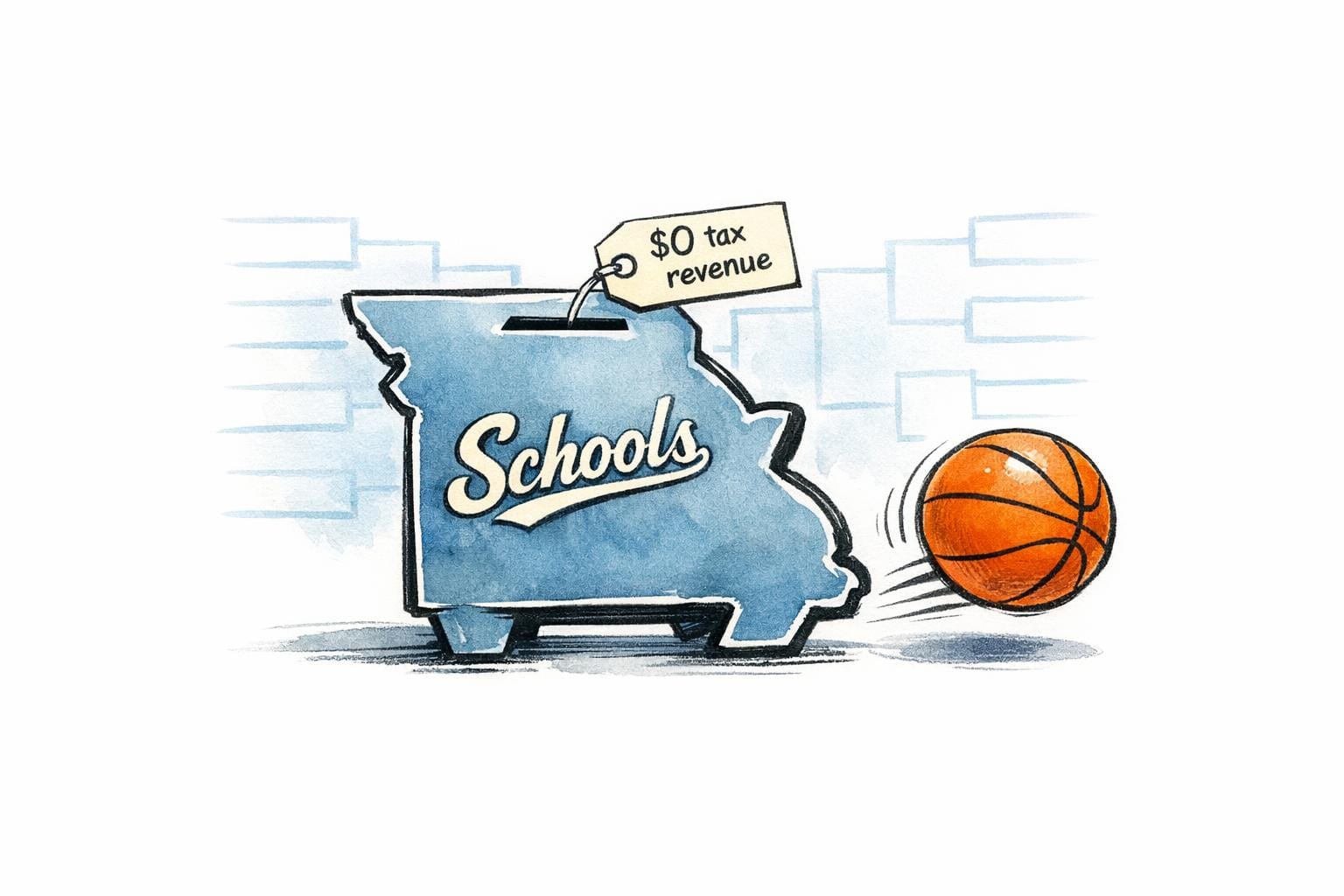
Missouri's sports betting industry continues to grapple with financial challenges as the state reports no tax revenue from sports wagering for the second consecutive month since legalization. Despite high initial activity, the state's sportsbooks have yet to generate a profit, leaving education funding expectations unmet.
Betting Activity and Losses Persist
After an impressive $543 million in wagers during December, January saw a significant drop to $385 million in bets handled by Missouri sportsbooks. Yet, even with this reduced activity, the industry recorded a net loss of $6.7 million for the month, following a $20.8 million loss from December.
According to Mike Leara, executive director of the Missouri Gaming Commission, these numbers were not unexpected. "As for the January numbers, they were not too surprising", Leara stated. He added, "We do expect an increase this month from March Madness, and we also look for sports wagering to see a spike for the upcoming World Cup."
One major factor contributing to these losses is the widespread use of promotional bets. Sportsbooks have heavily leaned on these free-play offers to attract new customers, writing off $125.1 million in free-play wagers in December and $33 million in January.
Sophomore Sam Pack, a student at the University of Missouri, highlighted how bettors take advantage of these promotions. "I like it when you sign up for apps, you get the bonus bets", Pack said. "Be smart with your picks. If you can do a protected play, do that, and then if you lose that, you can use bonus bets to win more money."
Industry analysts expect the initial wave of promotional offers to taper off. Ryan Butler, a senior news analyst at Covers.com, explained, "It's one of the larger concerns where you look at it, where when you have such operator-friendly numbers early on, where they're allowed to get rid of these free bets so heavily, it does cause a tax thing. This isn't terribly uncommon. And in states where they are, if they're allowed to do this and they're taking full advantage of it, so still stand by it. Once we get a little further in, this is going to level out."
Education Funding Shortfall
A key selling point of Amendment 2, which legalized sports betting in Missouri, was its promise to generate tax revenue for education. Under the amendment, sports betting revenue is subject to a 10% tax, with proceeds directed to schools. However, promotional deductions and other expenses have left taxable revenue too low to provide any funds for education so far.
Heather McArthur, chief financial officer at Columbia Public Schools, expressed skepticism about the funding's reliability. "We were conservative in budgeting for the foundation formula funding last spring because the decisions were made very late in the budgeting process, and we had doubts that the funds would actually be distributed as appropriated", McArthur revealed.
The group Winning for Missouri Education had previously estimated that the measure would bring in $100 million in tax revenue over five years. However, Butler cautioned against overestimating the impact of sports betting on education. "The impact is going to be really unnoticeable to even people in education", Butler said. "It’s always part of the campaign, and I think sportsbooks overall got a little bit better at it going, ‘Guys, this is just an opportunity. It’s a little bit of money. It’s something, this isn’t going to make or break Missouri schools.’"
Concerns for Student-Athletes Amid March Madness
As March Madness approaches, the University of Missouri has raised concerns about sports betting's effect on student-athletes. UM System President Mun Choi issued a statement emphasizing the importance of protecting athletes and maintaining the integrity of competition. The statement highlighted prohibited behaviors, such as influencing outcomes, sharing confidential information, and harassing players. Violations could result in disciplinary action under university policies.
"Maybe people joke about it in comment sections of Instagram posts, but I’ve never seen anyone seriously threaten a player", Pack noted, reflecting on the emerging concerns surrounding betting-related harassment.
Missouri officials are also monitoring player prop bets, which allow betting on individual college athletes. These bets have drawn scrutiny due to their potential to increase manipulation risks. Butler suggested the significance of these bets to sportsbooks is minimal, stating, "These individual college player props are less than 1% of their handle. It’s just not a huge deal for them. They’re still fighting to keep them."
Nationally, surveys indicate that 36% of Division I men’s basketball players have reported harassment linked to betting, underscoring the need for vigilance. MU Athletics Director Laid Veatch has called for further evaluation of policies, particularly as sports betting evolves.
Looking Ahead
While Missouri officials anticipate a boost in sports betting activity during major events like March Madness, the financial challenges facing the industry remain significant. With sportsbooks yet to turn a profit and promotional deductions continuing to impact taxable revenue, the promise of meaningful contributions to education funding remains uncertain. For now, the state will closely monitor these developments, including their broader implications for students and athletes alike.
Ready to bet smarter?
WagerProof uses real data and advanced analytics to help you make informed betting decisions. Get access to professional-grade predictions for NFL, College Football, and more.
Get Started Free