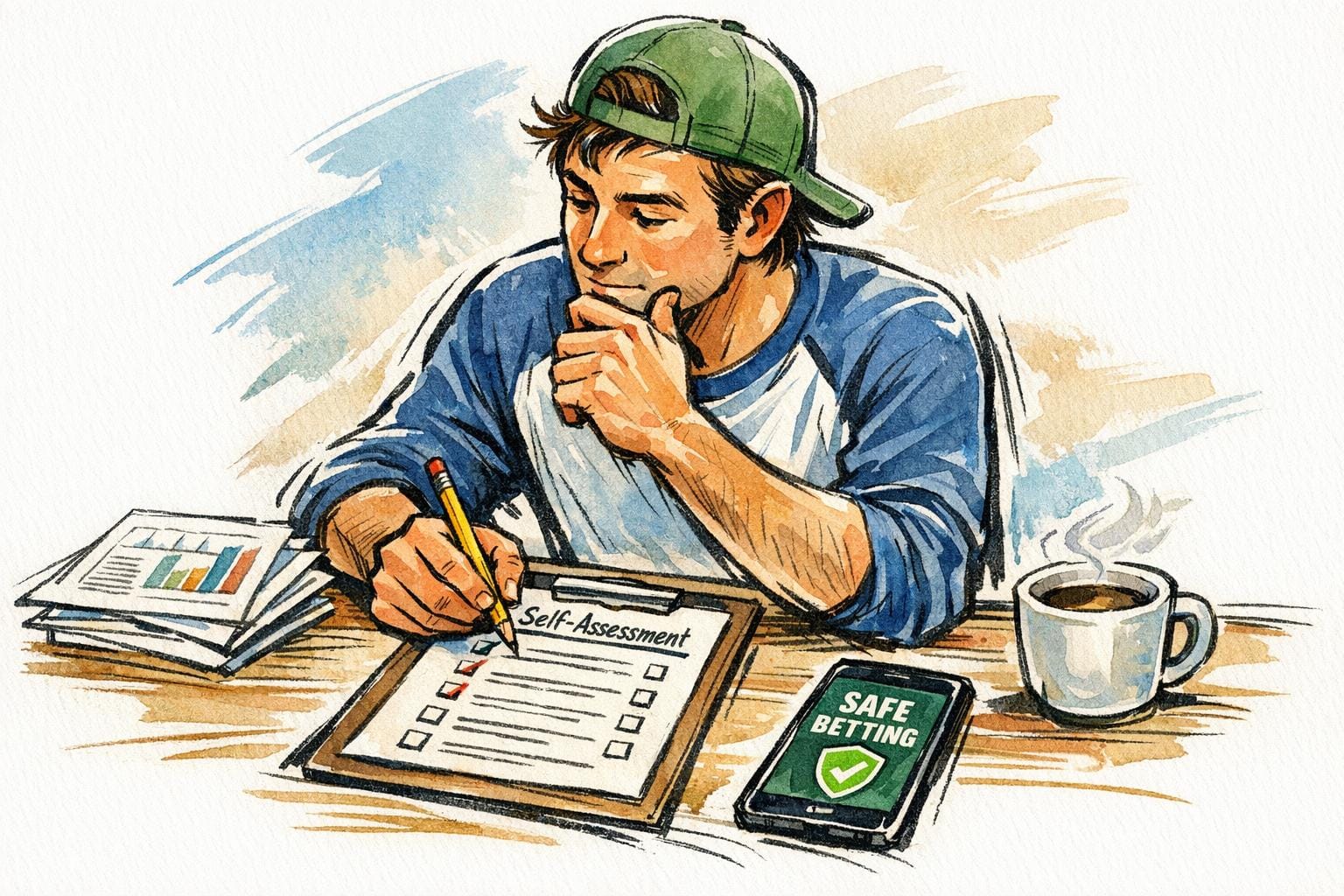
Self-Assessment Questions for Bettors
Sports betting can be fun, but it’s easy to lose control without realizing it. Regular self-assessment helps you spot risky habits early. Ask yourself:
- Are you constantly thinking about betting?
- Have you increased your bet sizes to feel the same thrill?
- Do you chase losses or hide your gambling from others?
- Are you betting more than you can afford to lose?
Answer honestly. If you notice patterns of risky behavior, it’s time to set limits or seek help. Tools like NODS-SA or PGSI can help assess your risk level. Low-risk betting stays within limits and doesn’t interfere with life. Moderate or high-risk behavior, however, may harm your finances, relationships, or mental health.
For high-risk cases, reach out to resources like the National Problem Gambling Helpline (1-800-522-4700) or local support services. Platforms like WagerProof can also help by providing data-driven tools to make informed betting decisions. Staying mindful and disciplined is key to responsible gambling.
Questions to Review Your Betting Habits
These questions are meant to help you spot potential warning signs in your betting behavior. Be honest with yourself - denial often accompanies addictive tendencies. If friends or family have voiced concerns about your gambling, take their words seriously.
Do You Think About Betting Too Often?
Constantly thinking about gambling - whether it's replaying past wins, obsessing over future bets, or scrambling to find extra funds - is a major red flag. If you've spent weeks consumed by these thoughts, it might signal a problem.
Ask yourself if you're using gambling as an escape from stress, anxiety, or personal issues. When betting becomes more important than your relationships, work, or studies, it's a sign that things are out of balance. Gambling can activate the brain's reward system much like drugs or alcohol, making it addictive. Consider how this fixation might be affecting other parts of your life.
Have You Increased Your Bet Sizes to Feel the Same Thrill?
If you're betting larger amounts just to get the same rush, this could signal a loss of emotional control. Research involving 42,000 gamblers found that bet sizes often increase after consecutive wins, driven by the "hot hand" fallacy.
To maintain control, experts suggest sticking to a standard "unit" size - 1% to 5% of your total betting budget. Straying from this and relying on "gut feelings" or "confidence" often leads to erratic and risky behaviors. These changes in betting patterns can pave the way for even riskier decisions, like chasing losses.
Do You Chase Losses After Losing Bets?
Chasing losses - betting more in an attempt to recover what you've lost - is a slippery slope that can drain your bankroll quickly. This behavior often stems from the belief that you need to win back your money immediately. Strategies like doubling down, such as in the Martingale system, amplify risks and can result in massive financial losses during losing streaks.
This approach also exposes you to greater volatility. While the potential for bigger wins exists, the chance of a losing streak wiping out your funds is much higher. Some gamblers even experience agitation or tension if they can't place bets, resembling withdrawal symptoms.
Have You Hidden Your Betting from Others?
"People who have gambling problems generally try to hide it from the people around them. They start lying to their spouses, families, coworkers, and friends." - Arizona Department of Gaming
If you're hiding your gambling activities or the extent of your losses from loved ones, it may point to a deeper issue.
Do You Bet More Than You Can Afford to Lose?
Betting beyond your financial limits can lead to debt, stress, and a host of other problems. The consequences often ripple out, affecting your mental health, relationships, and even your job.
To avoid this, strict bankroll management is crucial, no matter your betting strategy. Self-assessment tools like NODS-SA, PGSI, and CPGI can help you figure out if your betting has shifted from a recreational activity to something riskier. Take a hard look at your spending habits to ensure you're staying within safe financial boundaries.
What Your Answers Mean
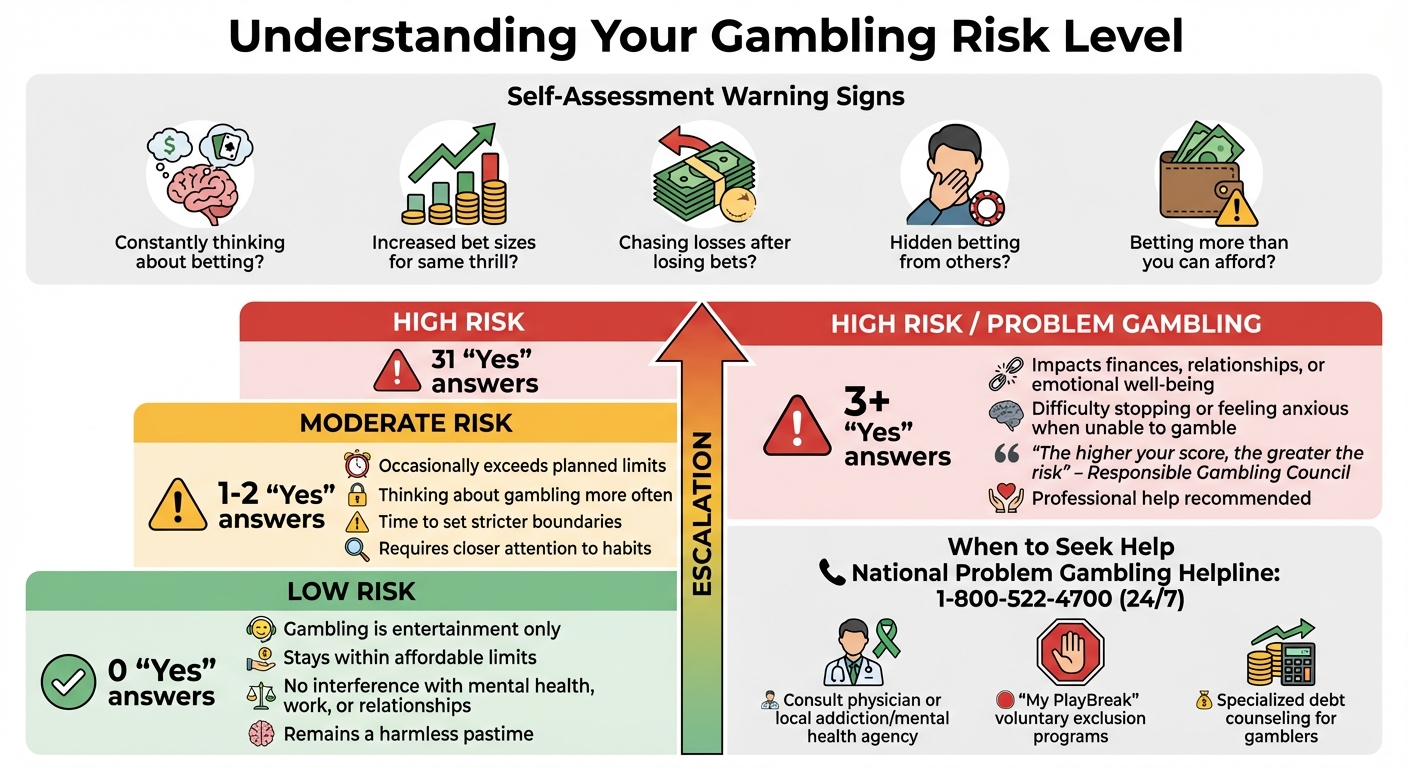
Gambling Risk Assessment: Warning Signs and Risk Levels
Your self-assessment sheds light on patterns in your gambling behavior. Tools like PGSI and NODS-SA suggest that the more "Yes" answers you provide, the higher your risk level may be.
Low, Moderate, and High-Risk Behaviors
Your responses can help you determine where your gambling habits fall on the risk spectrum.
If your behavior is low-risk, gambling is likely just a form of entertainment for you. You stick to limits you can afford, and it doesn’t interfere with your mental health, work, or relationships. In this case, gambling remains a harmless pastime.
Moderate-risk behavior might be indicated by answering "Yes" to one or two questions. This could mean you occasionally exceed your planned betting limits or find yourself thinking about gambling more often. These signs suggest it’s time to pay closer attention to your habits and consider setting stricter boundaries.
High-risk or problem gambling is evident when three or more questions are answered "Yes." The Responsible Gambling Council explains that "The higher your score [on a self-assessment], the greater the risk that your gambling is a problem". At this level, gambling may start to impact your finances, relationships, or emotional well-being. You might find it hard to stop or feel anxious when you’re unable to gamble.
When to Get Professional Help
Your answers can also indicate when it’s time to seek professional support. If your self-assessment points to high-risk behavior or if gambling is affecting your physical or mental health, finances, work, or relationships, don’t hesitate to ask for help. The Indiana Gaming Commission emphasizes, "A compulsive gambler tries to stop but is unable to quit without help".
For confidential, 24/7 assistance, contact the National Problem Gambling Helpline at 1-800-522-4700. You can also consult your physician or reach out to a local addiction or mental health agency for a formal diagnosis and treatment options. Additionally, programs like "My PlayBreak" allow you to voluntarily exclude yourself from gambling platforms while you focus on recovery. If financial issues are part of the problem, specialized debt counseling services for gamblers can provide meaningful support. These steps can help you regain control and work toward healthier habits.
Using WagerProof to Make Better Betting Decisions

If you've identified areas where your betting habits could use improvement, a data-driven approach can help you regain control. WagerProof provides tools designed to replace impulsive decisions with well-informed ones, making it easier to bet responsibly and avoid emotionally charged wagers.
These tools act as a bridge between self-awareness and actionable, data-based insights.
How WagerProof Encourages Responsible Betting
WagerProof employs a multi-model consensus system to uncover the data and calculations behind each recommendation. Tools like the Edge Finder highlight value opportunities with clear, transparent math, while WagerBot Chat delivers real-time insights on games, players, and strategies.
Instead of dictating actions, the platform offers recommendations, ensuring that you remain in control of your decisions. Real-time alerts notify you of market shifts and favorable odds, helping you avoid betting based on outdated or incomplete information.
WagerProof doesn’t just guide better decisions - it equips you with the tools to develop a strong, data-focused betting strategy.
Building a Data-Driven Betting Strategy
A disciplined betting approach begins with data. WagerProof’s AI Game Simulator processes real-time stats, player performance metrics, and historical data to simulate scenarios and predict potential outcomes. This helps you assess risks and variability before committing to high-stakes wagers, steering clear of an "all-in" mindset.
Manual research can be time-consuming, often taking hours. WagerProof simplifies this process, delivering instant insights. You can start with the Free Plan, which includes access to the Edge Finder demo and basic statistics, giving you the chance to explore data-driven betting at your own pace.
For a more comprehensive strategy, consider a hybrid approach: use the Edge Finder to identify promising opportunities across multiple events, then apply your own research to confirm high-value bets. This combination of automation and critical thinking ensures you stay engaged with your betting decisions. Upgrading to the Premium Plan unlocks advanced tools and access to a private Discord community for strategy discussions.
This structured, data-first approach not only supports responsible betting but also empowers you to make smarter, more calculated choices.
Conclusion
Taking stock of your betting habits regularly is what sets responsible bettors apart from those who might be heading into risky territory. By honestly evaluating your patterns, you create a benchmark to measure against healthier standards. As Playsponsible puts it, "Early intervention can help to prevent serious consequences and enable you to re-discover how to game responsibly". These regular check-ins are key to staying in control.
The questions outlined in this article - from asking if you’re betting too frequently to whether you’re hiding your activities from loved ones - are designed to catch warning signs early. Your answers can help pinpoint whether your habits fall into low, moderate, or high-risk categories.
If you find yourself in the moderate or high-risk range, it’s time to take action. This could mean setting stricter limits, stepping away for a while, or seeking professional help from a physician or local addiction and mental health services.
Combining honest self-reflection with data-driven tools can further enhance your control. Platforms like WagerProof allow you to transform impulsive decisions into calculated ones by providing transparent, math-backed recommendations. This approach keeps you actively involved in managing your betting behavior.
"To change our lives, we first must change our minds." - stop-gambling.com
FAQs
What are the signs that my betting habits might be becoming unhealthy?
Recognizing when betting habits might be veering into risky territory is crucial. Are you spending more than you can comfortably afford? Do you find yourself raising your bets just to recapture the thrill? Or perhaps you’re chasing losses, hoping to win back what you’ve already spent? These are all red flags.
Other signs to watch for include borrowing money or selling personal items to fund gambling, feeling guilty, anxious, or frustrated when you try to cut back, or struggling to stop even when you genuinely want to.
Take a step back and reflect on your habits. If any of this feels familiar, consider setting boundaries for yourself or reaching out for support. Betting should be about enjoyment - not a source of stress or financial pressure.
How can I avoid chasing losses while betting?
Chasing losses is a slippery slope that can lead to rash decisions and even greater financial strain. The best way to steer clear of this trap? Set a firm budget for your betting activities and, most importantly, stick to it - no matter what happens. Accept that losses are simply part of the gambling experience, and attempting to recover them in a rush often leads to deeper losses.
When emotions start to rise, take a step back. Betting impulsively when you're upset or frustrated can cloud your judgment and lead to poor choices. Instead, focus on making decisions grounded in data and analysis rather than reactions driven by feelings. Tools like WagerProof offer transparent, real-time sports data and insights, helping you craft a smarter, more calculated betting strategy.
How do I know if I need professional help for gambling problems?
If gambling has started to create problems in your life - like money troubles, strained relationships, or overwhelming stress - it might be time to consider getting professional help. Some warning signs to watch for include constantly thinking about gambling, needing to place bigger bets to get the same thrill, feeling frustrated or irritable when trying to cut back, or using gambling as a way to escape personal challenges. If you’ve tried to stop but find yourself unable to, or if friends or family have voiced their concerns, these are clear signals that support could make a difference.
Seeking professional help becomes even more crucial when gambling begins to affect your job, finances, or mental health. For example, missing work, hiding gambling losses, or experiencing anxiety and depression are serious indicators. If any of these situations sound familiar, reaching out to a counselor or a helpline can be a vital first step toward regaining control. In the U.S., you can connect with the National Problem Gambling Helpline at 1-800-522-4700 for confidential assistance and resources.
Related Blog Posts
Ready to bet smarter?
WagerProof uses real data and advanced analytics to help you make informed betting decisions. Get access to professional-grade predictions for NFL, College Football, and more.
Get Started Free